Bayer mentoring program gives grad students a glimpse of industry
Exploring roles in industry wasn’t always on the radar for insect ecologist and recent EEB graduate DeShae Dillard.
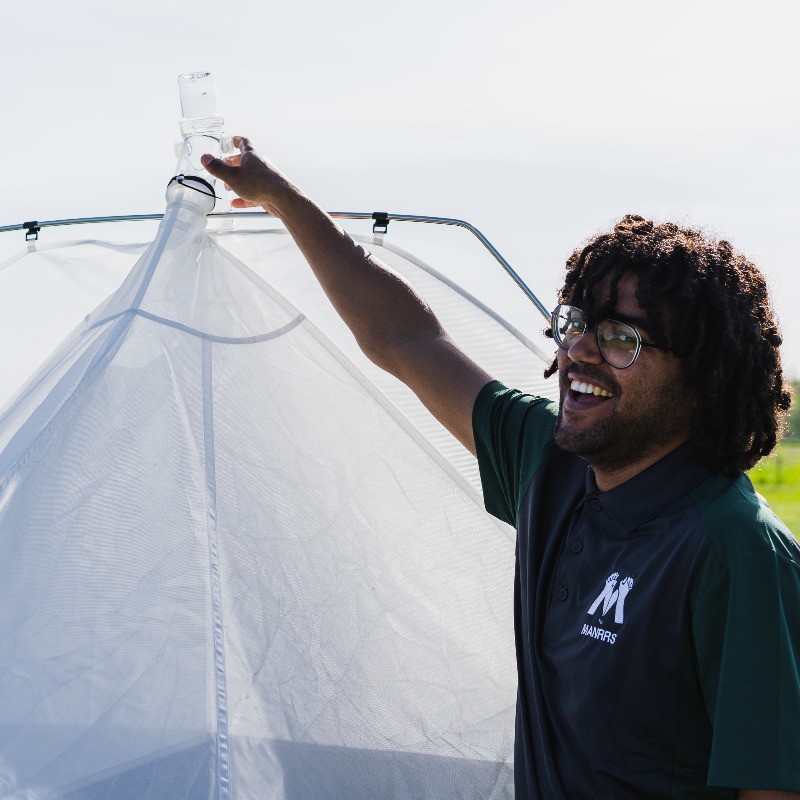
But as he got closer to the finish line of his doctoral program at MSU, he found himself facing a common dilemma: what should he do next?
With a newborn on the way, and federal science funding entering a period of uncertainty, he wanted to figure out what else he could do with his PhD. But he didn’t know where to start.
“I was starting to get worried about what the future was going to look like,” Dillard said.
A mentorship program sponsored by Bayer Crop Science meant that he didn’t have to navigate the challenges alone.
In 2024, he participated in the University Mentoring Program by Bayer, or B4U. The program pairs students with professionals in agriculture and crop science for a year-long mentoring experience focused on pulling back the curtain on industry roles and building the skills needed to stand out in today’s job market.
Now spanning 40-plus universities throughout North America, Latin America and Europe, the program supports budding scientists through opportunities to understand the nuances of company culture, identify their strengths, and hone “soft skills” such as interviewing.
Bayer scientists volunteer to provide one-on-one mentorship. The program also includes in-person site visits, and Bayer-hosted webinars on topics ranging from how to get internships and work visas to prioritizing mental health.
Dillard said the experience helped him expand his network and better understand where he might fit into the industry.
“Before the program I had trouble imagining an industry role I could see myself in,” Dillard said. “It really helped open to my eyes to what kinds of jobs I would be interested in exploring.”
For Bayer, the program is a great way to recruit new talent, said Bayer Design & Learn Lead Ryan Williams, who leads MSU’s B4U chapter, along with David Douches of MSU's Potato Breeding and Genetics Program.
“Companies like Bayer need people with very specific skills,” Williams said. “Building these personal connections helps make sure that we can get talented people who are ready to hit the ground running.”
Andrew’s journey
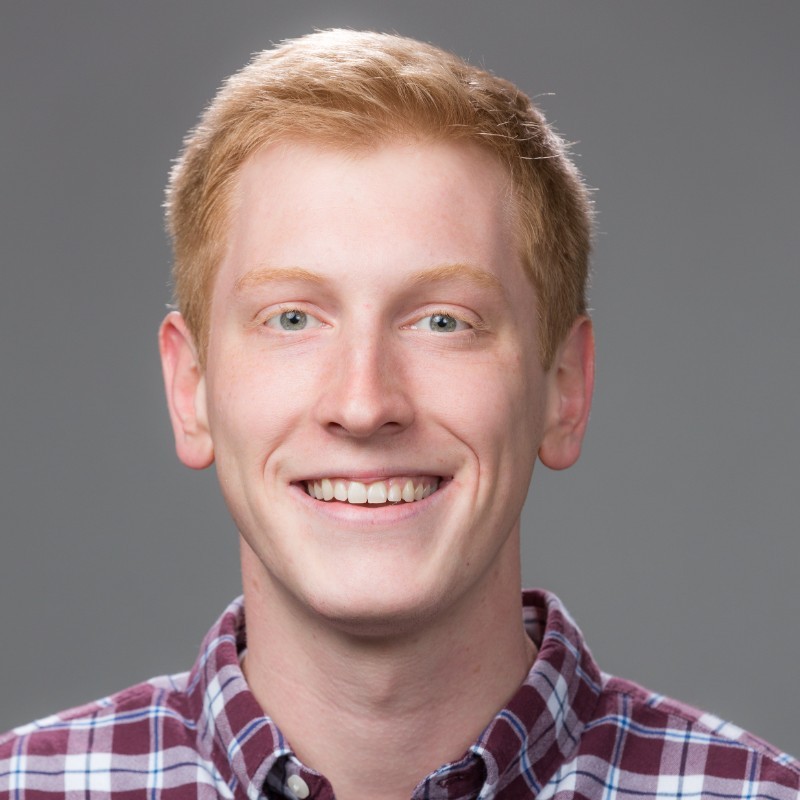
For plant biology PhD student Andrew Bleich, the program helped him realize that many skills acquired in academia are highly valued in industry.
But to take advantage of this, he discovered, you need to know how to frame your skills in way that would speak to potential recruiters.
“In academia, people tend to label themselves based on what system they work on. As in, ‘I’m a herpetologist,’” Bleich said.
“But from the industry perspective, they don't care as much what system you worked in previously.”
In other words, it doesn't really matter if you spent the last 5 to 10 years of your life studying salamanders or soybeans.
“Selling yourself as someone who has a lot of expertise in, say, heat stress experiments is a lot more important,” Bleich said. “A company like Bayer has the resources to teach you how to do that in whatever systems or crops that they're interested in.”
“There is also this assumption that the moment you leave academia, there's no intellectual freedom,” added Bleich, who studies adaptation genomics in switchgrass.
“Participating in the Bayer program gave me confidence that the research questions that I'm interested in are things that I'd be able to pursue elsewhere too, outside a university system.”
That’s not uncommon, Williams said. A lot of his mentees are also surprised at how similar the day-to-day work in industry and academia can be.
“There are some key differences, but where I sit in the company, we're reading and writing papers, inviting faculty to come give seminars, doing innovative science. A lot of people function as if they're a very independent postdoc.”
Maya’s journey
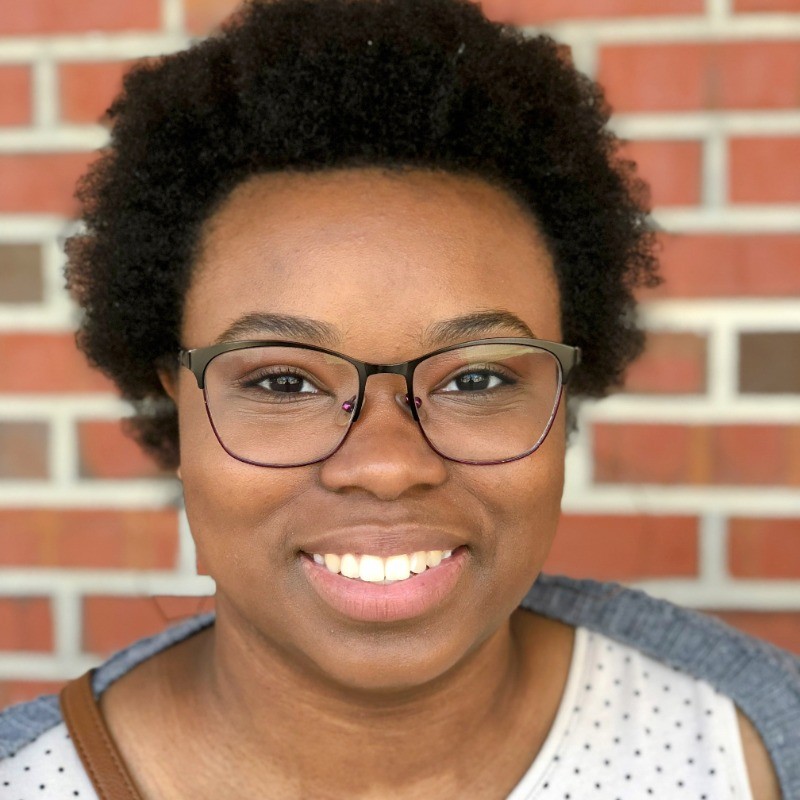
Plant biology and EEB doctoral student Maya Wilson Brown came into graduate school knowing that she wanted to work in industry when she finished her degree.
She knew the skills she’d developed for her polyploidy research — data analysis, programming, managing multiple projects, automating repetitive tasks — could apply to other problems too.
The challenge was knowing how to communicate them in a way that would land an invitation to interview.
“In academia, if you list a publication on your CV, then other people in academia implicitly understand all that went into making it happen,” Wilson Brown said. “I realized I needed to translate the parts of my research that are somewhat hidden.”
So she revamped her résumé to make it more industry-ready, focusing more on her impact and transferable skills — how she created value — rather than her academic achievements.
“For example, now I'm focusing less on listing publication titles on my résumé, and more on listing the projects and competencies that went into them, such as contributing code on GitHub,” Wilson Brown said.
It paid off. Last summer she landed a bioinformatics internship with the berry giant Driscoll's.
“I kept working with my mentor at Bayer, and when the internship opportunity opened up, I was able to show that I was a good fit. It really set me up to be successful.”
Princess’s journey
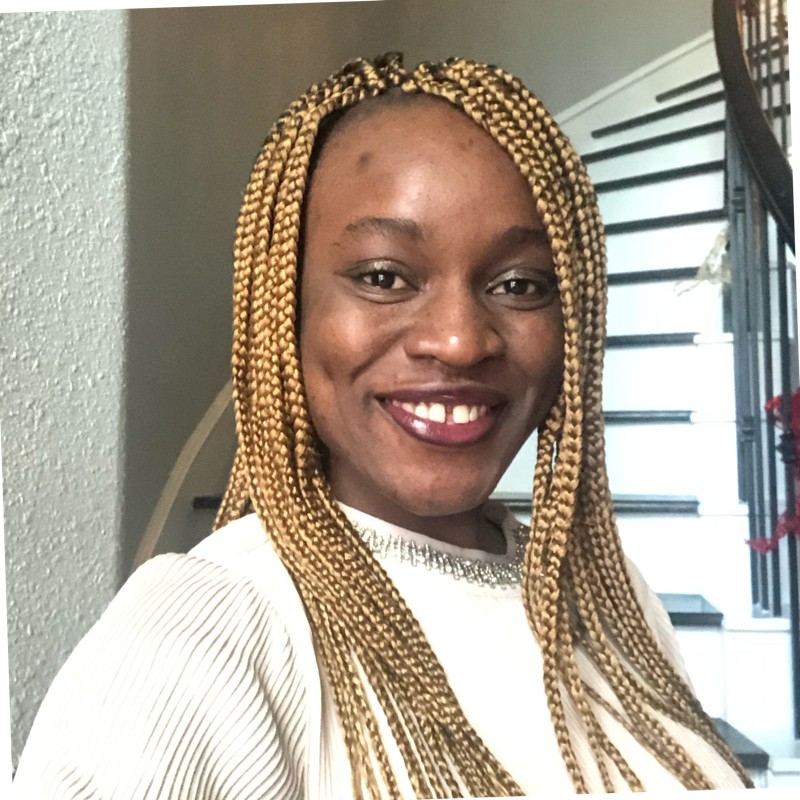
After being in academia for most of her career, the path into industry was a mystery for PhD student Princess Abu.
So when she got an email inviting applicants to join the 2025 cohort of the B4U program, she was intrigued.
“I wanted to know how to get a foot in the door,” said Abu, who studies coexistence mechanisms in closely related plants.
“Like, how can I build a competitive profile? How can I stand out in interviews? What kind of soft skills do I need to learn to thrive in industry?”
To get some practice with the multi-stage interviews typical of industry hiring, her mentor invited her to try her hand at a mock job interview with his team.
“Ask me about my dissertation research, and I can go on and on about what I'm working on,” Abu said.
But she was less clear how to ace behavioral interview questions, such as “could you tell me about a time when you faced resistance?”
“That was pretty new for me,” Abu said. “It was definitely a learning curve.”
The experience also taught her that science in industry is a team sport. But listing interpersonal skills such as problem-solving and conflict resolution on your résumé is not the same as convincing hiring managers that you have them.
“Work in industry can be super collaborative,” Abu said. “During the interview process you have to convey what strengths you would bring to the team.”
Josefa’s journey
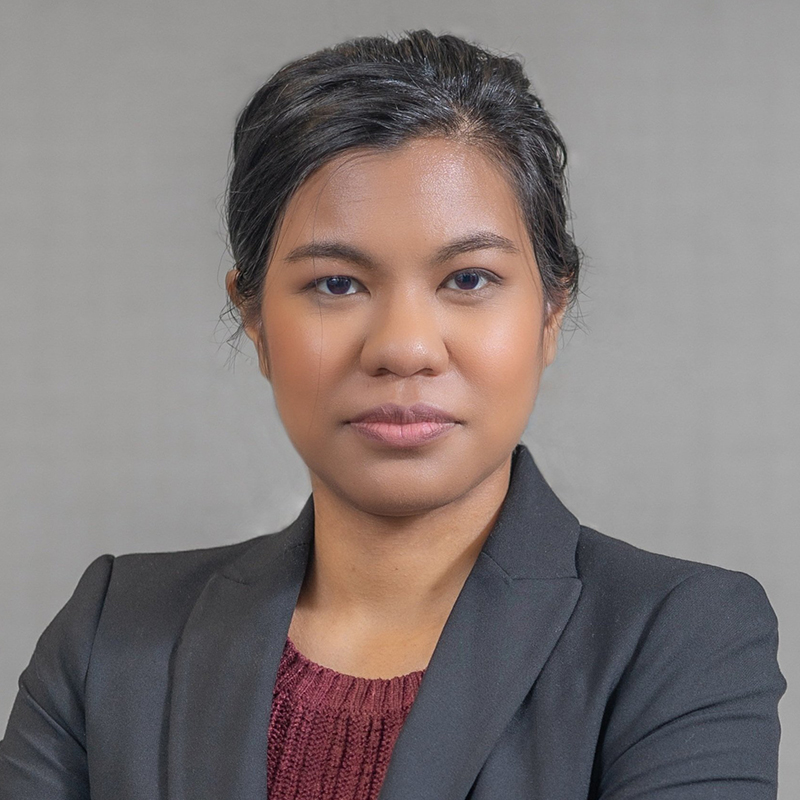
For 2025-2026 Bayer mentee Josefa Corpuz, a former English major who spent 15 years in writing and editing roles before transitioning to STEM, the biggest lesson she took away from the program was that, even in a large corporation or historically “safer” sectors, job security is never guaranteed.
Companies can shift focus. Restructuring or downsizing is common.
“You need to stay on your toes,” Corpuz said.
You have to take proactive steps to continually develop your skills, network, explore career paths. You need to be willing to relocate, take risks, and develop the capacity to bounce back.
“If you really want to work in science, you have to be willing to change with the tides and go where the current takes you, even when it means picking up stakes,” said Corpuz, who moved to Iowa to accept a job in corn breeding research with Vylor after earning her master’s in plant biology at MSU.
Learn more
The B4U program has had over three dozen student participants from MSU since the chapter launched in 2023, eight of which were from EEB.
A recent survey of EEB alumni suggests that roughly 12% of the program’s PhD graduates go on to careers in industry. That number has remained fairly stable over the decades, noted EEB associate director Lauren Sullivan.
The program will be offered once again in 2027, Williams said.
Graduate students and postdoctoral scholars interested in breeding, plant biology, microbial ecology, gene editing, physiology, chemistry, environmental science, engineering, data science and allied fields are encouraged to apply.
Applications will be open Dec. 1 to Feb. 22. Virtual information sessions to come; stay tuned.