New frontiers for student research, made possible by donors
It had poured rain for a week straight and everything she owned was drenched, but Bruna Amaral felt lucky.
The EEB graduate student had just netted a pair of African piculets, the smallest members of the woodpecker family.
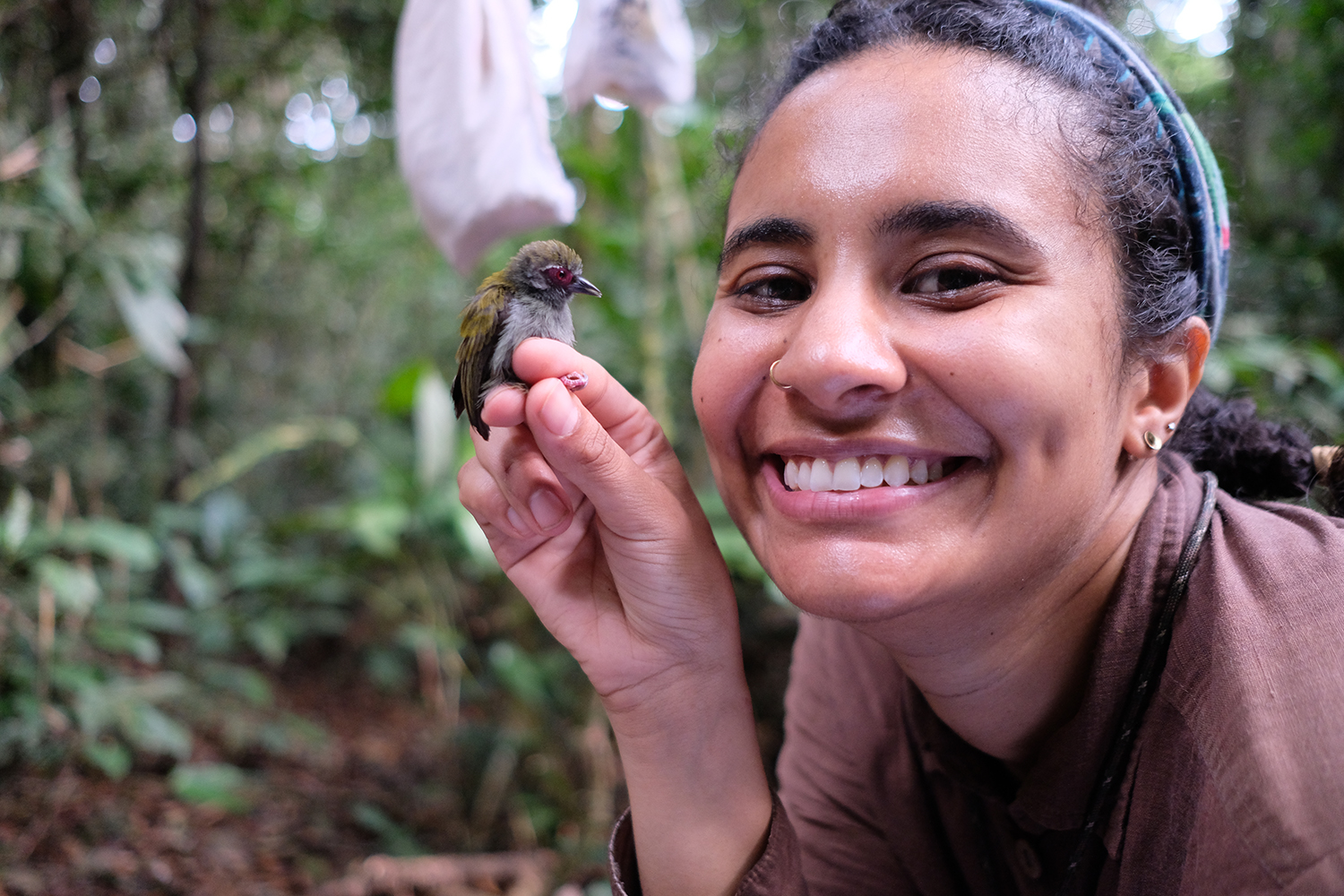
“We were lucky to capture a baby and the mother together!” she said.
Last year, thanks to financial support from donors Don and Shelly Jones, Amaral ventured deep into the rainforests of Equatorial Guinea on Africa's west coast.
The dense jungles in the area are best known for wildlife such as forest elephants, gorillas, and chimpanzees. But Amaral was interested in the lesser-known inhabitants, namely birds.
Swaths of Equatorial Guinea’s forests are being cleared to make way for hotels and highways for the nation’s new capital, or logged for prized hardwoods, and Amaral is interested in how birds are coping with the changes.
With funding from the Joneses, she was able to join a team of other scientists from a nonprofit called Biodiversity Initiative. Over the course of a month, they set up mist nets in the forest to catch birds flying through the understory and get an idea of what species live there.
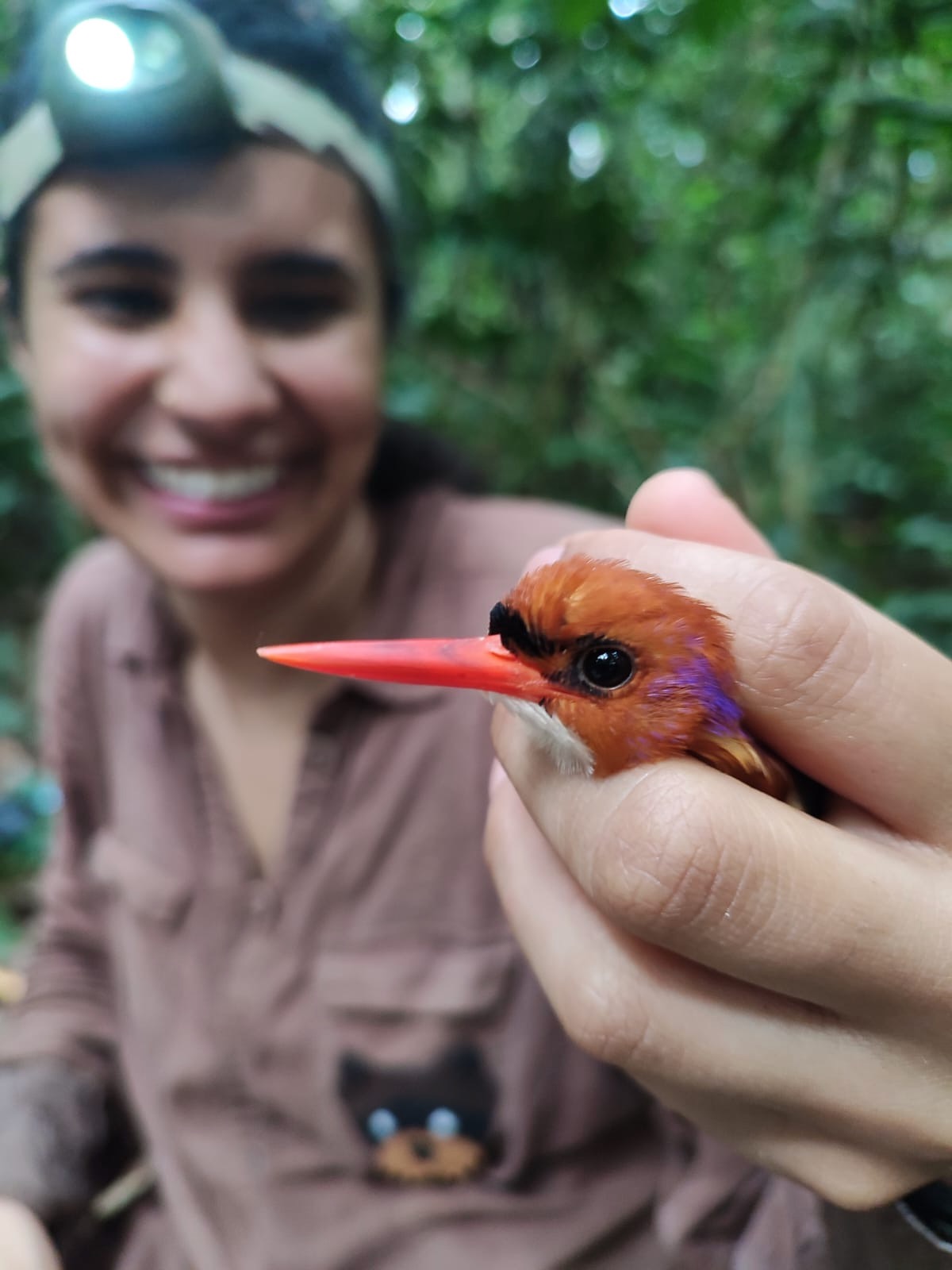
Whenever she could get internet access, Amaral sent updates from the field.
In one of her email postcards, she showed off a tiny African dwarf kingfisher with electric blue, orange and purple plumage, snagged in a mist net the team had suspended near a stream. In another net they caught a nectar-slurping olive sunbird. “There are no hummingbirds in Africa, so sunbirds play the same role, pollinating flowers and drinking nectar,” she beamed.
For each bird that they caught they attached a numbered band to its leg, noted the weight, age and other measurements, and then released it.
When they weren’t collecting data, the team also had a chance to connect with students at one of Equatorial Guinea’s two universities, where faculty are trying to create the country’s first biology program.
In all, they banded some 500 birds, from the yellow-whiskered greenbul to the chestnut wattle-eye.
For now, Amaral is just trying to understand what birds are there, how many chicks hatch each year, how long they manage to survive. Ultimately, she is interested in how well birds fare in the forest patches that have started to regrow since the area was logged, compared with original forest patches that remain.

Amaral’s work is one of several projects backed by the new Donald P. and Shelly Garcia Jones Endowment, which supports conservation research and data analysis, particularly in birds.
Through another fund under their name, the Joneses have also helped launch a publication award for graduate students. The first call for nominations saw 21 applications.
“Shelly and I have always had a passion for nature and for birds in particular,” said Jones, who earned an MBA from Michigan State in 1990. “They are a great indicator for where the planet is going.”