Haddad lab helps to bring butterflies back from the brink
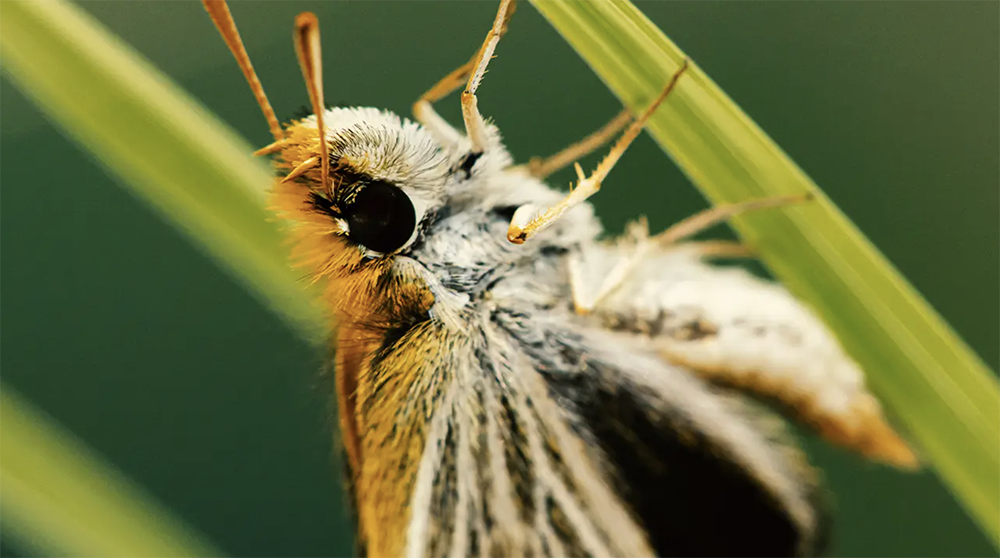
On a summer day in Michigan, a tiny Poweshiek skipperling butterfly — smaller than a quarter — takes flight over a restored prairie.
To most people, it looks like an ordinary butterfly. But to the researchers watching in the wings, this moment represents something extraordinary. Just a few years ago, scientists feared the Poweshiek skipperling was disappearing forever.
Now, researchers at Michigan State University and their conservation partners have helped pull one of the world's rarest butterflies back from the brink of extinction.
Working alongside many partners including John Ball Zoo, Minnesota Zoo, the U.S. Fish and Wildlife Service and the Michigan Department of Natural Resources, the team transformed one of North America's most vulnerable butterflies into a growing conservation success.
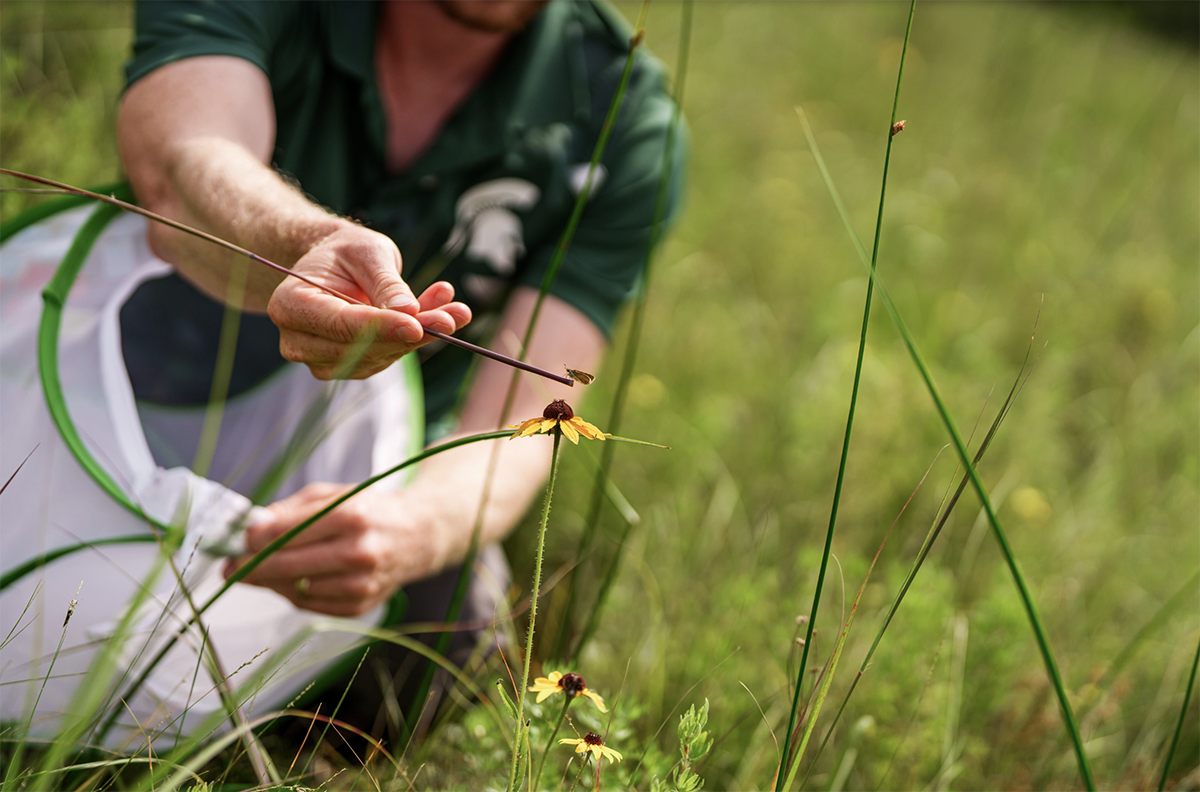
“We were actually able to save that species from extinction,” says David Pavlik, research assistant at MSU's W.K. Kellogg Biological Station and John Ball Zoo, who has spent years helping lead the recovery effort. “We released 102 butterflies in 2022 and more than 1,300 butterflies in 2025.”
Early in the recovery effort, the goal wasn't to create new populations — it was simply to keep the butterfly from disappearing from the last few populations left in Michigan.
Some butterflies are being used to establish new populations, while others are strengthening the few populations that remain. Those releases are already helping wild populations begin to thrive.
Researchers aren't releasing butterflies to prevent extinction anymore — they're releasing them to expand a recovering population.
At one point during the recovery effort, researchers were caring for more Poweshiek skipperlings in captivity than existed in the wild anywhere on Earth.
Once found throughout the Midwest — from Iowa and the Dakotas to Michigan and southern Canada — the Poweshiek skipperling began disappearing with startling speed in the early 2000s. By 2022, researchers documented only nine Poweshiek skipperlings in the entire United States.
The success of the program has expanded beyond the Poweshiek skipperling. Researchers in the Haddad lab at MSU and John Ball Zoo are now raising and reintroducing two additional endangered butterflies — the Mitchell's satyr and the Karner blue — to restore populations across Michigan.
Butterflies signal a healthy ecosystem
“It may not be obvious why one little, tiny butterfly disappearing is important, but it's a big part of a bigger system that helps support us here,” says Bill Flanagan, conservation manager at John Ball Zoo, who has assisted with the recovery firsthand.
Butterflies are more than colorful insects. Scientists consider them indicators of ecosystem health — and their absence is an early warning sign that something is wrong.
“These butterflies are like canaries in a coal mine,” says Nick Haddad, professor in MSU's College of Natural Science, the W.K. Kellogg Biological Station and the Ecology, Evolution and Behavior Program. “One-third of Midwestern butterfly species has declined by about 40% in the last 20 years and none of them have increased.”
Researchers point to multiple causes behind the declines, including habitat loss, wetland destruction and changing agricultural practices.
“Less than 1% of the prairie habitat that once existed remains today,” says Pavlik.
The widespread use of neonicotinoid pesticides has also taken a toll — the chemicals can drift beyond their intended targets, harming beneficial insects and reducing biodiversity.
“We can't ignore the ethical, moral obligation of people not being the cause of extinction of a species,” Haddad says.
Read the full story on MSU Today.