Newest EEB presidential postdoc aims to bring ‘One Health’ and plant health together
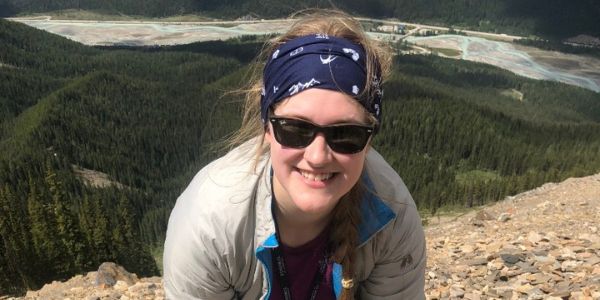
When we talk about health and disease, we talk about people, and animals, but plants are often overlooked, says plant community ecologist Beatriz Aguirre.
That’s despite plants’ importance to the food we eat, the oxygen we breathe, and the health of our ecosystems.

Aguirre sees an opportunity to narrow the knowledge gap.
As the newest recipient of the MSU Presidential Postdoctoral Fellowship in Ecology, Evolution, and Behavior, Aguirre plans to study how viruses influence plant health, at a time when extreme weather is becoming more common.
Her work is part of an interdisciplinary approach called “One Health,” which recognizes that people, animals and the environment are all interconnected.
Take plant viruses, Aguirre says. Each year, farmers around the world lose more than 30% of crops to viruses and other plant pathogens.
“However, these impacts don’t just stop at crops,” Aguirre said. That’s because viruses also jump back and forth between crop fields and wild, native plants in neighboring habitats.
But just how many viruses are lurking in wild plants, and where, is less clear.
For her project, Aguirre aims to identify these “hidden viral communities” in the common wildflower goldenrod, and study what they mean for plant health under climate stresses such as droughts and deluges.
To do that, Aguirre will create the first maps of plant virus distributions across the Midwest and eastern U.S., by screening herbarium specimens for viruses.
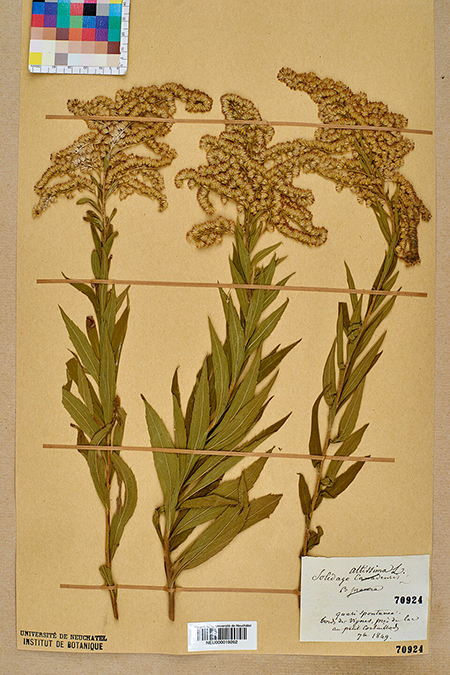
The herbarium specimens will also serve as "windows into the past" that document how the plants have responded to extreme weather over the past century.
As part of her fellowship, Aguirre also plans to teach a special topic seminar on supporting learning among first-generation students, and to lead a series of workshops on demystifying GitHub, the software collaboration tool.
Aguirre will be working in collaboration with Carolyn Malmstrom in plant biology, Phoebe Zarnetske in integrative biology, and Jim Moran in integrative biology and plant, soil and microbial sciences.
Their research could help better predict plant disease outbreaks and what infection could mean for plant health in a warming world.
“We are thrilled about Beatriz’s work to bring plant health into conversations about 'One Health,'" said EEB Director Elise Zipkin.
“Between that and her interests in reducing hurdles to academic success for first-generation students, Beatriz joins a community of interdisciplinary fellows who are not only tackling some of the world’s most pressing problems, but also promoting access and building bridges across MSU,” Zipkin added.
“These fellows exemplify the kind of interdisciplinary scholarship that strengthens Michigan State University,” said Provost Laura Lee McIntyre. “Their work connects departments and colleges while also supporting the success of our graduate students through innovative research and engagement activities.”
The MSU Presidential Postdoctoral Fellowship in Ecology, Evolution, and Behavior is funded through a joint effort initiated by the provost, the vice president for research and innovation, the graduate school, the College of Natural Science, the College of Agriculture and Natural Resources, and the College of Engineering.
Launched in 2020, the aim of the fellowship is to continue building academic excellence within the EEB program through innovative, integrative research and community service.
The fellowship search committee was comprised of faculty Kevin Liu, Phoebe Zarnetske, Lars Brudvig, Ingo Braasch and Fred Janzen; postdoc Chia Hsieh; and PhD students Jana Woerner and Sylvie Martin-Eberhardt.
The search for the next EEB presidential fellow(s) will begin later in 2026. Additional information can be found on the EEB website.