Jen Roedel awarded for community-engaged teaching and learning
Jennifer Roedel, an EEB doctoral student in the Department of Entomology, has been selected for the Graduate Student Award for Community Engagement Scholarship in community-engaged teaching and learning.
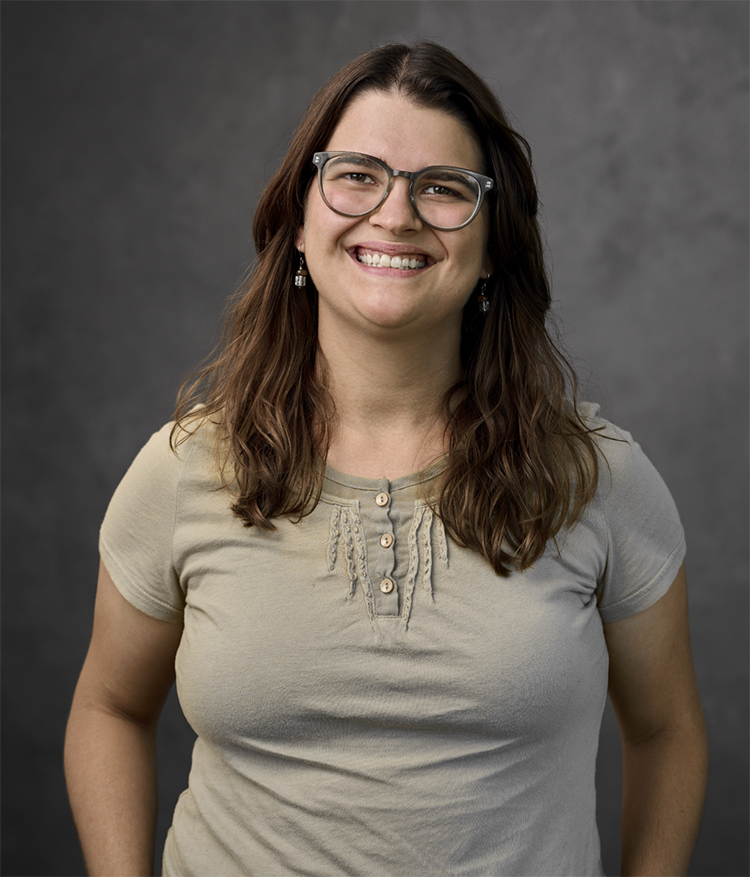
Roedel works in Zsofia Szendrei’s lab and studies how habitat management strategies can support beneficial insects while limiting pest pressures in agricultural systems. Her work brings science, community partnership and accessible education together to support small-scale and urban growers who often lack equal access to agricultural resources.
Roedel began her academic journey at MSU in 2018 as a research technician in Rufus Isaacs’ lab, where she first became interested in pollination research. She later completed a master’s degree focused on asparagus beetle management, which gave her extensive field experience and strengthened her commitment to grower-informed research.
“Working with farmers during my master’s showed me how important it is to stay connected to grower needs,” Roedel said. “Smaller and urban farmers often do not have the same level of extension support, and I really wanted to help bridge that gap in my Ph.D.”
Roedel leads the Bee Urban Growers (BUG) Project, a North Central Region SARE-funded research and education initiative that supports pollinator conservation and urban agriculture. The project partners with nine farms in the Detroit and Lansing areas, including community gardens, youth-led farms and small commercial operations. The BUG Project focused on farms growing cucurbit crops, such as squash and pumpkins, which rely heavily on insect pollination.
In 2024, the BUG Project installed native wildflower plantings on each partner farm, adding 250 plants across 15 native species to enhance pollinator habitat. The team surveyed urban farmers about their perspectives on pollinator management, studied native bee communities and launched a community science initiative on iNaturalist to document bee species across the Great Lakes region. The project will continue through 2026.
“Urban farmers are incredibly passionate, but many do not have access to the same resources as larger farms,” she said. “They know pollinators are important, but they often do not know how to install or maintain habitat. I wanted to give them the tools and support they need.”
Roedel collaborated with partners including the Xerces Society for Invertebrate Conservation, Detroit Butterfly Nursery, Detroit Hives, Detroit artist Joseph Ferraro and the Detroit Partnership for Food, Learning and Innovation (DPFLI), along with nonprofits and Extension professionals. Through these partnerships, the team created presentations, on-farm demonstrations, online educational content and materials tailored specifically to urban farming conditions.
Two pollinator management field days in 2024 and 2025 provided hands-on learning opportunities through workshops, poster sessions and collaborative plantings. DPFLI hosted the events, helping Roedel’s team connect with local growers and community groups.
Roedel also served as the lead author of the project’s “Native Bee Habitat Management of Urban Farms in the Great Lakes Region” pocket guide. She emphasized the essential role that community-based collaborators played throughout the process.
“Working with partners who were already rooted in these communities made a tremendous difference,” Roedel said. “They helped us connect with farmers, reach people we could not have reached on our own and make our resources more useful for growers.”
Throughout the project, Roedel prioritized relationship-building and open communication with growers. She facilitated regular surveys, advisory board meetings and ongoing feedback loops to ensure the project remained aligned with what farmers wanted to learn.
“Working with growers helped me understand how important it is to meet people where they are,” Roedel said. “It guided me to focus on what farmers want to learn and what will genuinely support them.”
Roedel expressed gratitude for her advisor, Zsofia Szendrei, and for research technician Karma Thomas, who played a central role in fieldwork, plantings and outreach activities.
She hopes the award helps elevate the value of community-engaged work within graduate education and agricultural research more broadly.
“There is a natural interest among graduate students to do outreach, but it is often treated as something you do in your spare time,” she said. “Recognizing this work shows that it is valuable and worth supporting. I hope it inspires more students and advisors to make outreach part of their programs.”
Read the full story from MSU's College of Agriculture & Natural Resources.