Examining the impact of management practices on Michigan farms
Michigan farmers are teaming up with Michigan State University (MSU) researcher Christine Sprunger and the MSU W.K. Kellogg Biological Station to explore how land management practices impact soil health.
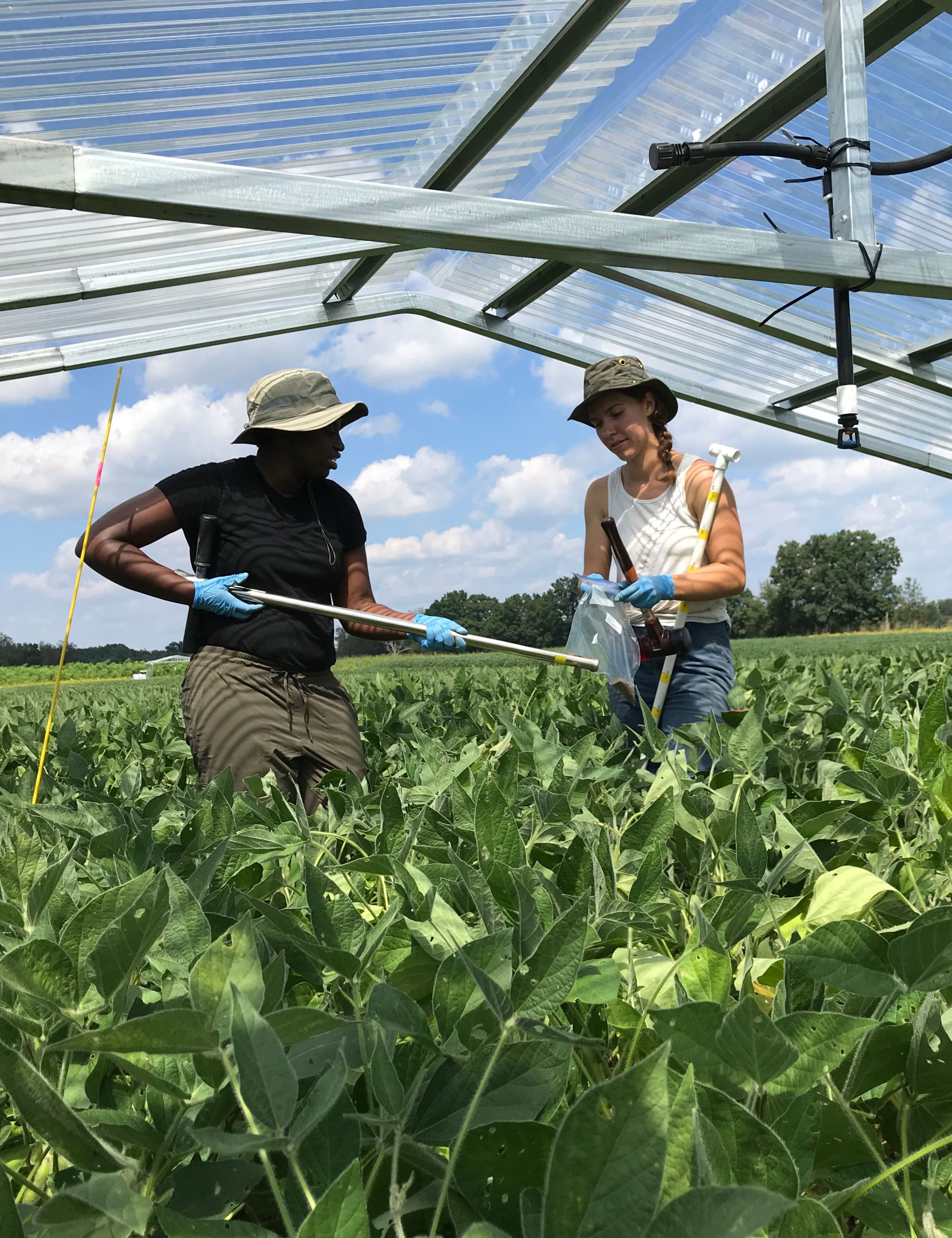
Sprunger, Associate Professor of soil health in the Department of Plant, Soil, and Microbial Sciences, based at KBS, is collaborating with more than 90 farmers across Michigan to examine the impact different agricultural practices have on soil health, ecosystem diversity and crop productivity.
The KBS research team is working closely with partner farms. Researchers collect samples of each farm’s soil, greenhouse gas emissions, and above-ground biomass, while also working with each farm to understand management practices and unique socioeconomic conditions.
“We're really grateful that so many farmers wanted to participate in the study,” Sprunger said. “We have a large interdisciplinary team working on this project who are getting to know the farmers very well. There is a lot of collaboration and communication with faculty in a wide range of departments at MSU. We get a management survey from each farm that is critical to our study, because we can't really analyze the data without understanding the management.”
The collaboration allows researchers to collect a large data set to better understand dynamics across different soil types, different climates, and under different management conditions. Future work from this study will also link biophysical results to socioeconomic aspects of regenerative agriculture as well.
Land management’s impact on soil health
The Agricultural Resiliency Program (ARP) provided $1.25 million over three years to fund the research. ARP is a partnership among MSU AgBioResearch, the Michigan Plant Coalition, and the Michigan Department of Agriculture and Rural Development (MDARD). Sprunger leads one of these large interdisciplinary projects funded through this program. The team is comprised of 12 other researchers and Extension Educators from MSU.
The team is working to assess factors influencing climate adaptation and mitigation of major commodity crops in Michigan. Researchers are examining how regenerative agriculture practices enhance soil health and yield stability, evaluate the relationship between soil health and greenhouse gas emissions, and identify factors that influence farmer adoption of climate-smart practices.
Through the first year of the study, Sprunger said a key finding is that, regardless of soil texture, management practices play a pivotal role in the soil health of a field.
“Fundamental soil science says that your soil texture influences your soil health and your soil organic matter. What our study has found is soil texture does indeed play a role, but we saw multiple instances in which a sandy or silt loam soil had better soil health indicators than a clay soil,” Sprunger said. “That's showing that management also plays a critical role.”
Practices like reducing the number of tillage passes or incorporating cover crops or perennials have shown to improve soil heath, Sprunger said. “We can definitively say that management can boost your soil health if you're doing things correctly, even if you’re farming on sandy soil.”
Read the full story at MSU's College of Agriculture and Natural Resources.